In an era where consumers interact with brands across countless digital and physical touchpoints, discover how to reimagine entire product categories - fast. Our approach helps brands redesign with speed and precision, accelerating progress through the development pipeline while strengthening and diversifying supply chains. Enhance features, boost margins, and redefine your product portfolio for measurable impact.
By:
Gregor Mittersinker
October 31, 2025
Is your brand ready to scale? Ensure your Visual Brand Language (VBL) is cohesive, powerful, and aligned to drive market expansion. Connect with us for a complimentary introduction to our VBL Toolkit and a personalized brand assessment outlining your customized path forward.
The right Visual Brand Language (VBL) goes beyond aesthetics. It acts as a silent ambassador of your brand, creating recognition even before a customer reads a single word. This level of consistency strengthens trust, differentiates the brand from competitors, and ultimately drives engagement and loyalty. A well-designed VBL serves as a strategic differentiator, enabling companies to communicate consistently, build trust, and stand out in competitive markets. Beyond branding, VBL aligns stakeholders across functions, fostering collaboration, efficiency, and innovation. In a brand's strategic contexts, it ensures that complex information is clear, actionable, and accessible. supporting patient adherence and efficacy. The right VBL can simplify workflows, guide decision-making, and reduce cognitive load; effective visual design humanizes technical content and enhances the user experience. Leveraging core design principles, clarity, consistency, accessibility, and human-centered communication, VBL strengthens brand equity, improves patient outcomes, and transforms organizational alignment into coordinated, high-impact initiatives.
A strong VBL is a powerful tool for companies seeking to establish consistency and differentiate themselves in competitive markets.
A strong VBL is a powerful tool for companies seeking to establish consistency and differentiate themselves in competitive markets. By defining clear guidelines for typography, color palettes, iconography, imagery, and layouts, VBL ensures that every user touchpoint, digital platform, marketing material, product packaging, and branding element communicates the brand in a unified way. Consistency reinforces recognition, builds trust, and signals professionalism, positioning the company as a credible and reliable player in its industry. Beyond consistency, a thoughtfully crafted VBL can express a brand’s unique personality and values, allowing it to stand apart from competitors. By delivering a cohesive and memorable visual experience, companies can strengthen their reputation, influence perception, and create an impression of innovation and leadership. In crowded markets, VBL becomes not just a design tool but a strategic differentiator that drives visibility, credibility, and long-term brand equity.
A well-crafted VBL ensures consistency across digital platforms, educational materials, and tools, reinforcing understanding and trust.
Crafting the right VBL plays a critical role in ensuring improved user engagement by making complex information accessible, clear, and actionable. At its core, it should prioritize clarity, presenting information in ways users can quickly understand and follow. Consistency across all materials, from packaging to digital interfaces, reinforces recognition and reduces confusion. A thoughtful approach to color, typography, and iconography can guide patients through instructions, highlight key information, and support comprehension across diverse audiences. Accessibility is paramount: designs must account for varying literacy levels, cultural contexts, and physical or cognitive challenges. Integrating user feedback creates a continuous improvement loop, ensuring materials are not only visually engaging but also effective in promoting proper use and adherence. By aligning VBL with these principles, organizations can empower users, enhance outcomes, and build trust through visual clarity and intuitive design. Through purposeful visual hierarchies, intuitive layouts, and meaningful iconography, design highlights critical information, reduces cognitive load, and supports confident decision-making. A well-crafted VBL ensures consistency across digital platforms, educational materials, and tools, reinforcing understanding and trust. Beyond aesthetics, design humanizes the experience, connecting technical information to the real needs, emotions, and behaviors of its users.
Engaging with users at this stage helps break out of the internal echo chamber, aligning brand goals with human-centered design principles to build a stronger, more relevant design system.
While the process may sound abstract, creating a functional VBL can be approached systematically. Every VBL initiative should begin with a comprehensive Visual Brand Audit, a structured evaluation of how your brand is represented across all touchpoints. The goal is to uncover inconsistencies, identify strengths, and reveal gaps in how your visual elements express the brand’s identity.
This process goes beyond aesthetics; it examines whether your visuals truly reflect the brand’s purpose, tone, and emotional intent. Engaging with users at this stage helps break out of the internal echo chamber, aligning brand goals with human-centered design principles to build a stronger, more relevant design system. Ask critical questions: What feelings should our brand evoke? What personality should our visuals convey? The right audit establishes a foundation for clarity and alignment, ensuring every design decision moving forward reinforces a cohesive and authentic brand experience.
Brands can guide perception, enhance user engagement, and cultivate a consistent, differentiated identity across all touchpoints and product experiences.
Visual Design Principles are the strategic visual and conceptual tools that guide brand expression across different contexts and applications. They provide a flexible framework capable of addressing any design challenge while maintaining coherence and intent. These principles are documented to illustrate how they can be applied consistently and effectively across the brand’s evolving portfolio. Within the product Visual Design Language, certain Signature Elements serve as the brand’s distinctive visual identifiers. These elements translate brand personality into tangible design expressions—through form, texture, logo application, information design, surface treatment, and interaction details. Together, they create a cohesive visual signature that reinforces recognition and communicates the brand’s unique character.
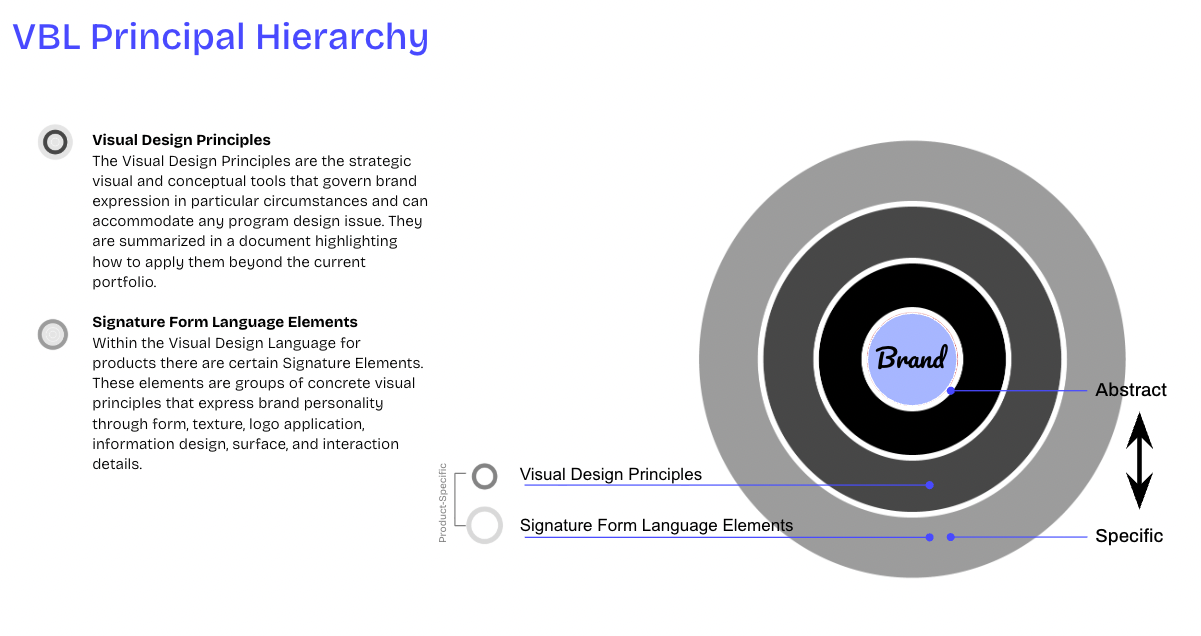
At the macro level, a product’s overall form and silhouette serve as the foundation for immediate recognition, creating a memorable first impression in the marketplace. As the viewer engages more closely, signature shapes, color transitions, and distinctive design details communicate the brand’s identity with greater specificity, differentiating individual models and functional variations. At the micro level, surface treatments, logo applications, and deliberate choices in color, material, and finish (CMF) convey quality, craftsmanship, and tactile appeal, reinforcing the brand’s personality and values. When considered holistically, this hierarchical approach ensures that every visual element—from broad form to intricate detail—is coherent, instantly recognizable, and strategically aligned with the brand. By establishing a structured visual hierarchy, brands can guide perception, enhance user engagement, and cultivate a consistent, differentiated identity across all touchpoints and product experiences.
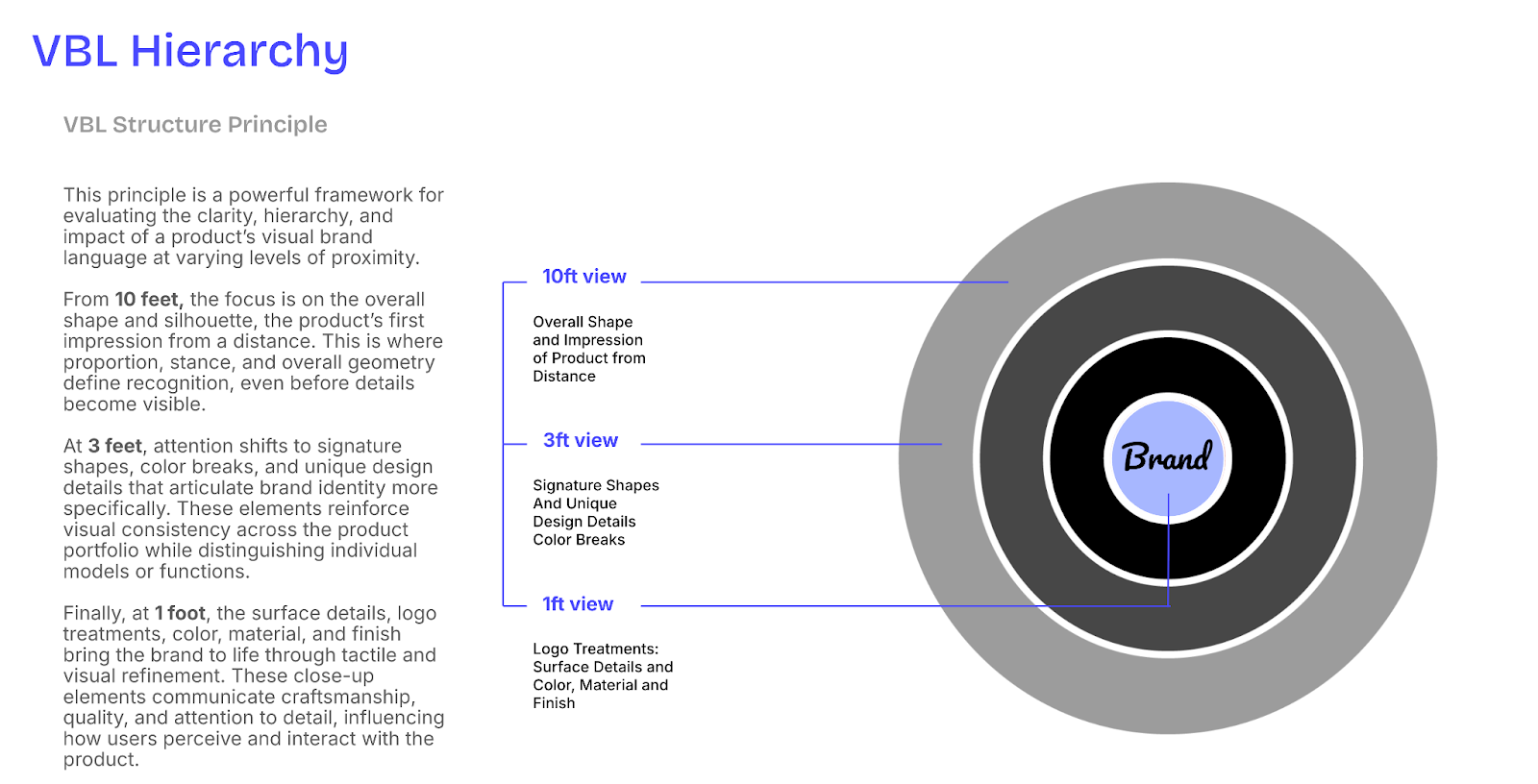
Within the broader conceptual framework, it’s essential that each product maintain its own visual identity to clearly express variations in functionality, performance, and positioning. This differentiation emerges by translating the brand’s fundamental design principles into distinct visual languages through variations in form, proportion, material, and detailing. In essence, the brand system must be flexible yet cohesive: a living visual language with enough elasticity to adapt across categories while preserving a recognizable core. This balance between consistency and creative freedom ensures that every product feels unmistakably part of the same family, yet carries its own story and purpose.
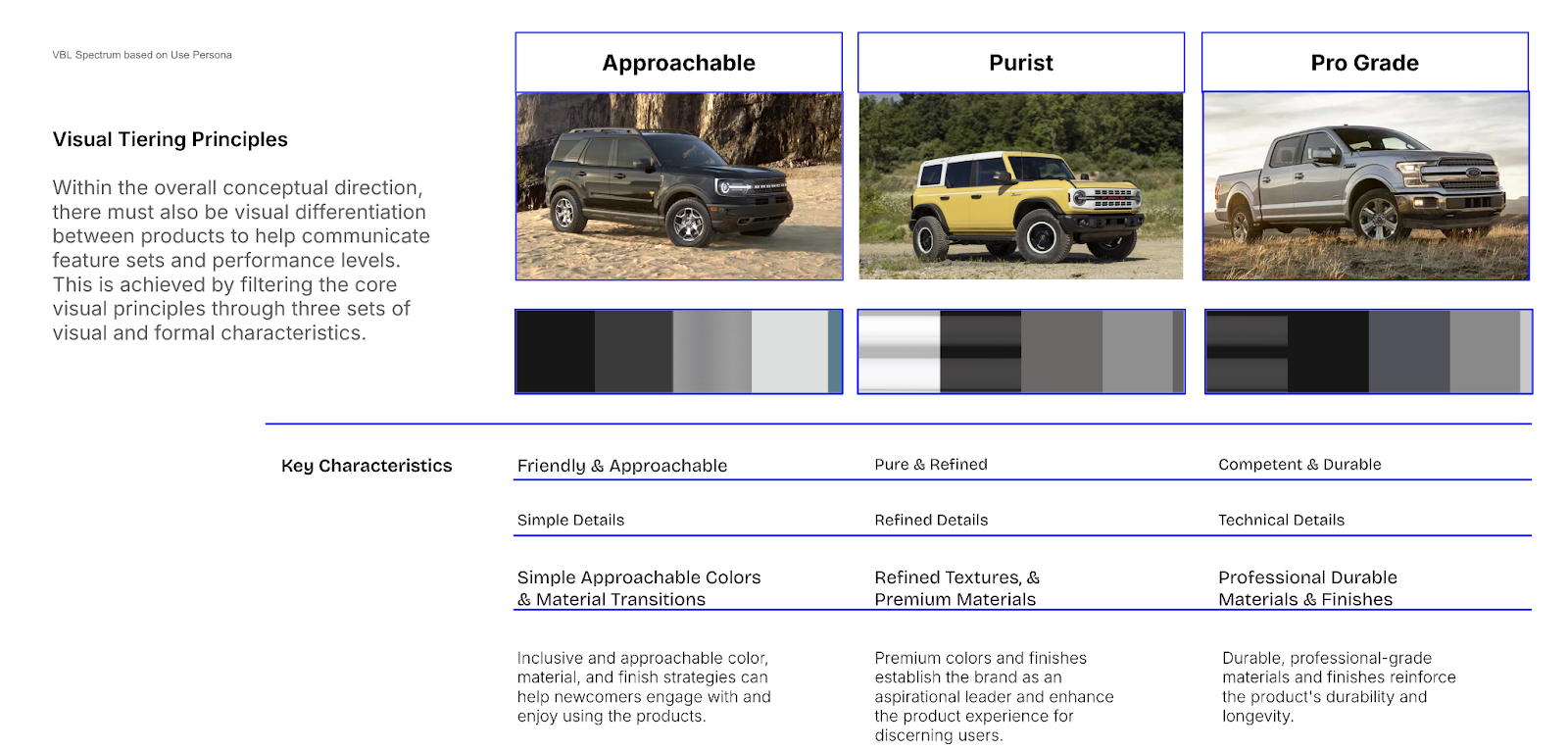
Designing The VBL Brandbook
By establishing formal guidelines, we aim to create seamless continuity and a consistent brand experience for our users and partners worldwide.
This brand book serves as the foundation for our design standards and guidelines. Its purpose is to provide a strategic, structured framework that empowers innovation while ensuring a unified and holistic brand language across our diverse product portfolio. From product and packaging to branding, user interface, user experience, and marketing, every touchpoint should reflect the brand's promise of precision, reliability, and forward-thinking design. By providing clear guidance on visual elements such as color, typography, iconography, and layouts, this book helps internal teams and external partners apply the brand confidently and consistently.
By establishing formal guidelines, we aim to create seamless continuity and a consistent brand experience for our users and partners worldwide. A formal VBL document is intended for internal stakeholders and key external collaborators, guiding everyone who shapes, communicates, or represents the strong Instruments brand values in the 3D space.
By aligning stakeholders through consistent and purposeful design, companies not only drive efficiency but also cultivate a culture of shared purpose, creativity, and forward-thinking leadership. Design becomes both a strategic tool and a catalyst for organizational innovation. Design has a unique ability to unify stakeholders across large organizations, creating alignment around shared goals and visions. By providing a clear and consistent VBL and thoughtfully crafted design systems, teams, from marketing and product to R&D and operations, can speak the same visual and strategic language. This shared framework reduces misunderstandings, accelerates decision-making, and fosters collaboration, even in complex, cross-functional environments. Beyond operational clarity, design can spark innovation, inspiring teams to explore new ideas while remaining aligned with the company’s overarching objectives. In large organizations, this unifying power transforms fragmented efforts into coordinated initiatives, enabling faster execution and more impactful outcomes.
Design empowers users to act effectively. In doing so, it transforms complex ecosystems into navigable, user-centered experiences that enhance engagement, improve outcomes, and foster confidence in the brand's values.
When employees understand not just what to do but why, the system becomes intuitive, self-reinforcing, and adaptable, reducing the need for constant oversight or corrections. A comprehensive VBL guide should go beyond simply listing rules for using visual elements—it should explain the reasoning behind each choice, providing context for colors, typography, icons, and layouts. This context helps teams internalize and socialize the system, making it easier for designers, marketers, and external partners to apply the guidelines consistently and confidently across all touchpoints. Well-documented guidance also accelerates onboarding, strengthens cross-functional collaboration, and ensures the brand remains cohesive as teams grow and projects evolve.
A compelling VBL transforms how a brand is perceived, making it immediately recognizable, trustworthy, and engaging. By defining clear visual principles, embedding them into every touchpoint, training teams, and iterating over time, brands can create a system that is both consistent and flexible. Design empowers users to act effectively. In doing so, it transforms complex ecosystems into navigable, user-centered experiences that enhance engagement, improve outcomes, and foster confidence in the brand's values. In today's competitive marketplace, visual coherence is a powerful differentiator. It communicates professionalism, builds loyalty, and allows the brand’s personality to shine. Ultimately, a VBL is more than aesthetics; it is a strategic framework that turns identity into action, ensuring that every interaction reflects the brand’s core values and vision. Brands that master this approach don’t just look good, they feel right, leaving lasting impressions that resonate with employees and customers alike.
Austrian-born Gregor is in his element while dissecting most complex business & technology challenges and creating their next level business outcomes. Prior to starting Loft, Gregor led a Strategy & Design team at Accenture Interactive, where he helped launch new multi-billion dollar businesses for global fortune 500 companies. He also led creative teams at Rollerblade, InMusic & Cross.He has worked in the US, Europe & Asia over the past 30 years has earned numerous design awards as well as holds well over 100 patents for product innovations around the globe.
Outside of business hours he teaches Service Design & UX at RISD, and hosts a weekly think tank with global business & political leaders around the world.
A natural motivator, leader, collaborator, and innovator, the only thing that takes Gregor’s eyes off of design for long is his love for winter sports, kitesurfing and DJing in local clubs. Many have tried to keep up with Gregor, few have succeeded.
Next level inspiration … Japanese wood craft and joinery, minimalist forms that are functional and proportioned.

Previous
Next

Innovation
Ecosystem Design
Strategy
Branding


.png)


