Our NAMM 2026 recap explores industry trends and the latest releases from Fender, Korg, AlphaTheta, and other brands at this year's show.
By:
Gregor Mittersinker
January 28, 2026
The NAMM Show remains the music industry’s most important annual convergence point, where instrument makers, audio technology companies, software developers, and designers gather to preview what’s next in music creation. Each January in Anaheim, the full spectrum of the industry is represented, from early-stage startups to legacy manufacturers, all showcasing new instruments, production tools, and performance systems before they reach the market. More than a trade show, NAMM functions as a live test environment: musicians, producers, and engineers engage directly with products, providing immediate feedback that often shapes final designs. From a product and industrial design perspective, NAMM 2026 revealed a clear directional shift in hardware development. Across categories, DJ equipment, electronic instruments, studio controllers, and practice tools—the industry is moving away from screen-centric, minimal interfaces and back toward physically expressive design. Controls are becoming more tactile, materials more substantial, and interaction models more deliberate. The goal is no longer to emulate software, but to create hardware that behaves like an instrument: responsive, intuitive, and deeply tied to physical gesture.
Walking the show floor, it was evident that manufacturers are prioritizing embodiment and engagement. Knobs, pads, faders, and mechanical elements are being designed not just for function, but for feel reinforcing the idea that meaningful musical expression still relies on the human hand as much as digital precision.
The following examples represent a cross-section of the tools, systems, and design approaches that stood out during hands-on evaluation and conversations with product teams.
A clear trend in the DJ booth is the shift toward laptop-free performance systems that preserve the tactile, expressive feel of traditional gear. By integrating processing and media management directly into hardware, manufacturers are reducing reliance on screens while emphasizing physical controls, motorized platters, faders, and hands-on effects, so performance feels more like playing an instrument than operating software.
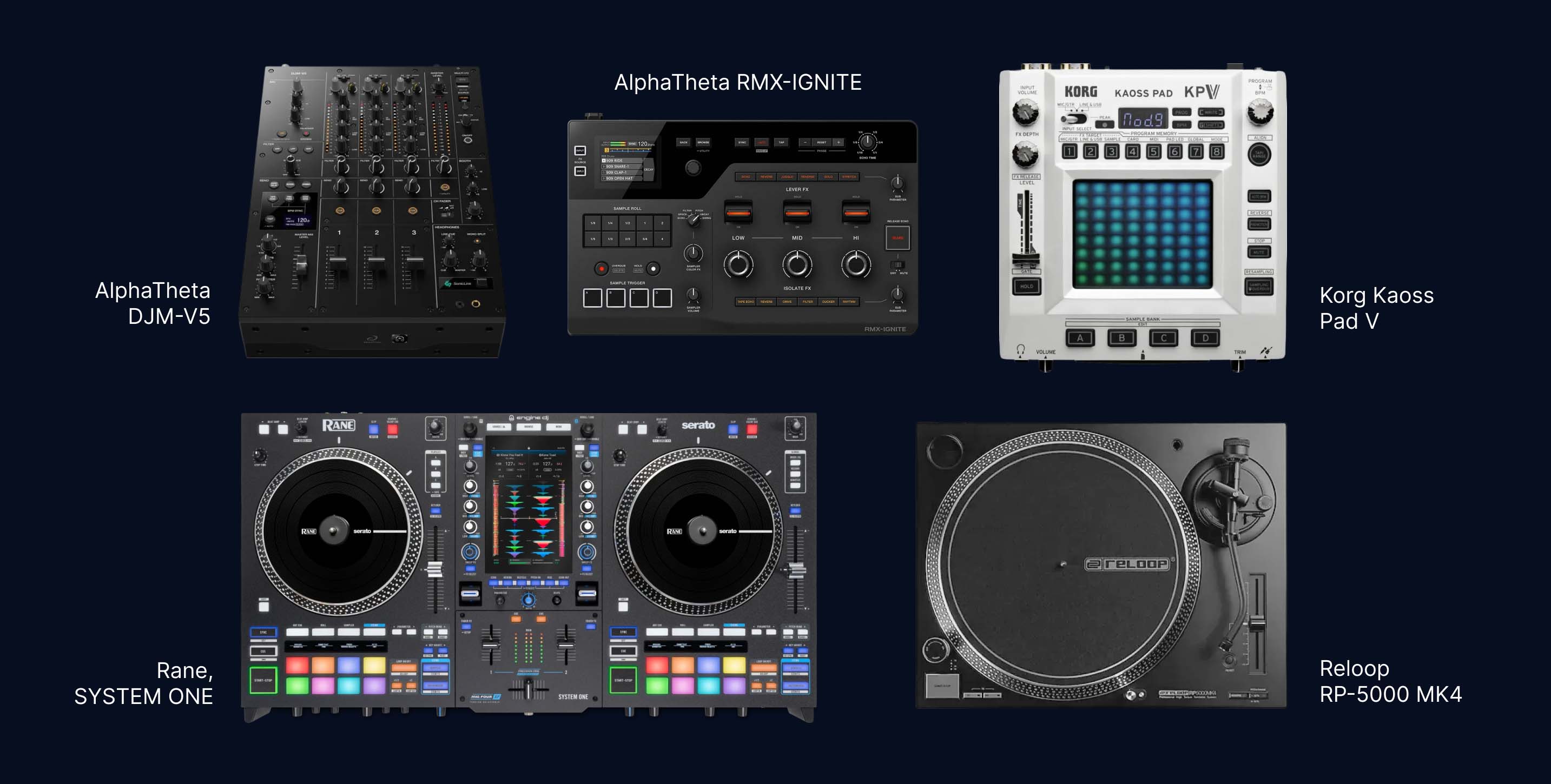
AlphaTheta showcased several products that underscore the industry’s renewed focus on physical expression and performance-driven design. The RMX-Ignite effector is built to actively provoke creativity, using oversized levers and hands-on sound-shaping controls to encourage dynamic, gestural interaction during live sets. With the Rane System One, the familiar feel of traditional turntables is preserved through motorized platters, while eliminating the need for a laptop—bridging classic DJ technique with modern, standalone workflows. Korg revived its iconic Kaoss Pad with the Kaoss Pad V, introducing a reimagined interface, advanced vocal processing, and dual-touch capabilities that enable real-time, highly expressive sound manipulation. AlphaTheta’s DJM-V5 distills the professional feature set of the flagship V10 into a compact three-channel mixer, clearly designed for space-constrained booths without compromising performance. Rounding out the category, the Reloop RP-5000 MK4 delivers a high-torque, direct-drive experience with a newly developed brushless motor and vibration-damped chassis, ensuring consistent, stable operation even in high-volume club environments.
Innovation in the guitar category is centered on a careful balance between reviving historic icons and introducing new, visually driven approaches to learning and playing.
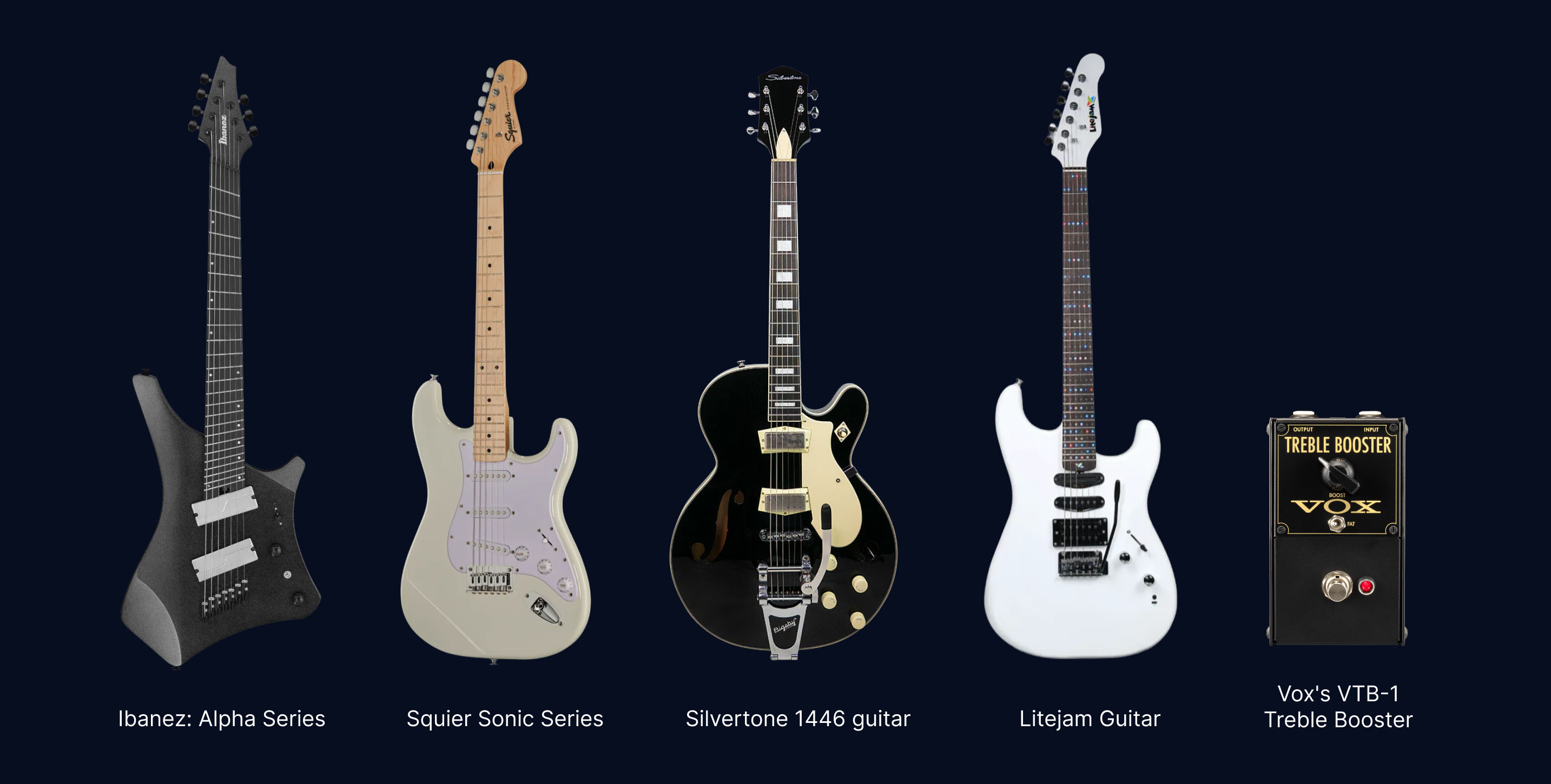
In the guitar and amplification space, manufacturers highlighted a mix of heritage-driven revivals and thoughtfully modern learning tools. Ibanez drew attention with its Alpha Series, pairing striking multi-scale designs with new colorways for the ever-popular RG line. Fender, through its Squier Sonic Series, leaned into accessibility by introducing compact mini versions of the Stratocaster and Precision Bass, while also celebrating legacy with an anniversary edition of the Hot Rod Deluxe amplifier. Nostalgia was further reinforced by the return of the Silvertone 1446, bringing the iconic semi-hollow “Chris Isaak” model back into production after six decades. On the innovation side, the Litejam Guitar stood out for its visually driven approach to learning, using an RGB LED fretboard to illuminate chords and scales in real time. Rounding out the category, Vox’s VTB-1 Treble Booster delivered classic tone shaping in its purest form—a single-knob pedal designed to pair seamlessly with tube amplifiers.
The studio is returning to a “workhorse” mindset, with standalone gear that emphasizes reliability and tactile control. Knobs, faders, pads, and switches put creators directly in touch with their sound, blending digital flexibility with the hands-on feel of traditional hardware.
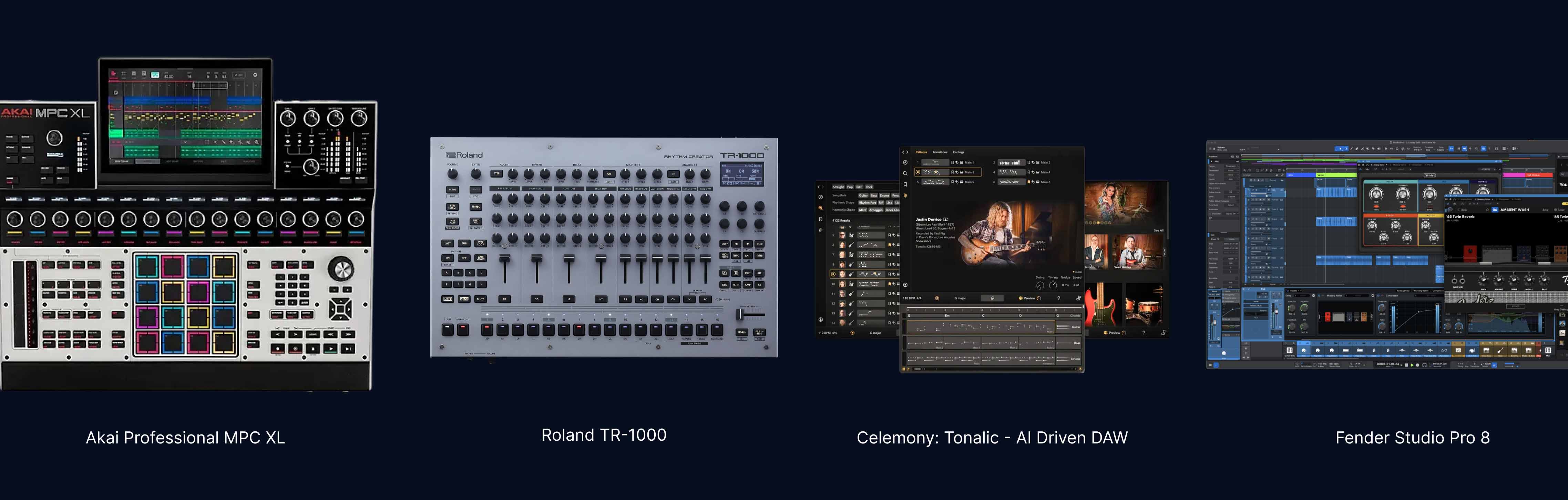
In the studio and production space, several standout tools demonstrated the balance of hands-on control and modern versatility. Akai Professional’s MPC XL continues to set the standard for standalone workstations, offering 3D-sensing pads and sixteen dedicated knob screens that enable deep, computer-free music production. Roland returned to its analog roots with the TR-1000 Rhythm Creator, its first drum machine in over 40 years with real analog voices, blending classic 808 and 909 heritage with modern sampling and a high-performance layout. Fender’s Studio Pro 8 brings legendary tones and an extensive virtual instrument library to a compact recording platform, making professional production accessible from day one. On the software side, Celemony’s Tonalic plugin leverages note-manipulation technology to adapt thousands of recordings from real session players, providing a creative, hybrid approach that goes beyond traditional AI-assisted tools.
New recording tools are making it easier for creators to capture professional-quality sound with less setup and friction, letting them focus on experimentation and creative expression.
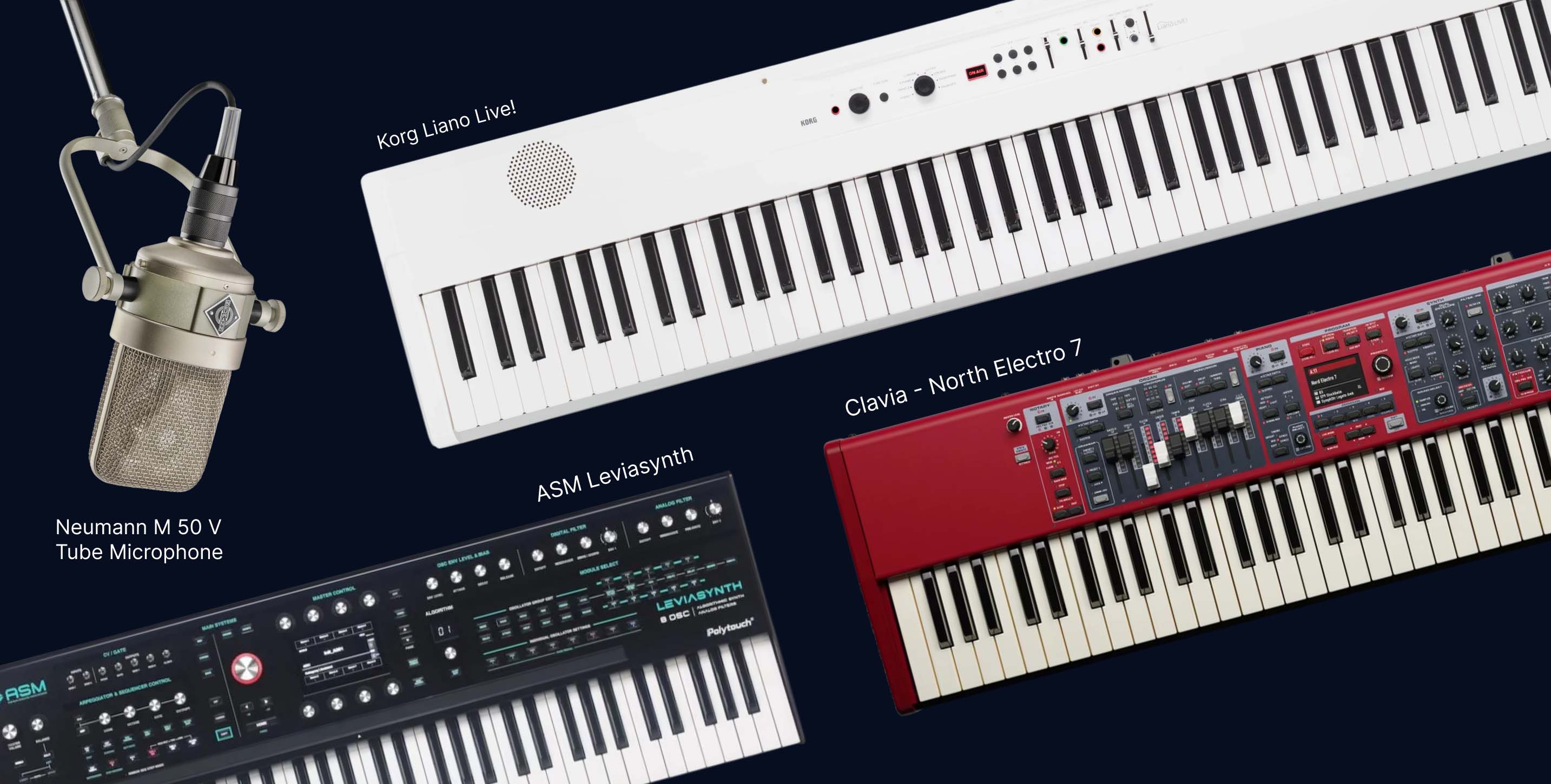
In the realm of studio and performance instruments, several releases stood out for their combination of innovation and practicality. Korg’s Liano Live! is a digital piano tailored for streamers, featuring a built-in mixer and microphone stand, with simple connectivity via a single USB-C cable. Neumann reintroduced the legendary M 50 V, a faithful recreation of the 1951 tube microphone, ideal for orchestral recording and immersive setups. On the synthesis front, ASM’s Leviasynth offers 16 voices with eight oscillators each and more than 144 sound-morphing options, effortlessly bridging classic FM tones and experimental textures. Meanwhile, the Nord Electro 7 marks a major evolution of the series, adding virtual analog and FM engines to its sample-based foundation, along with high-resolution color displays and dedicated effects for every section.
Across NAMM 2026, a clear theme emerged: artists are seeking a deeper, more tactile connection with their instruments and production tools. From laptop-free DJ systems and analog-inspired drum machines to visually guided learning guitars and hands-on studio workstations, the industry is prioritizing gear that feels responsive, intuitive, and expressive. Whether through revivals of classic designs or innovations that make practice and production more accessible, manufacturers are putting the artist’s touch at the center of the experience. It’s an exciting time for design, and we’ll continue to watch how these products perform in the market, sharing any notable breakthroughs as they arise.
Austrian-born Gregor is in his element while dissecting most complex business & technology challenges and creating their next level business outcomes. Prior to starting Loft, Gregor led a Strategy & Design team at Accenture Interactive, where he helped launch new multi-billion dollar businesses for global fortune 500 companies. He also led creative teams at Rollerblade, InMusic & Cross.He has worked in the US, Europe & Asia over the past 30 years has earned numerous design awards as well as holds well over 100 patents for product innovations around the globe.
Outside of business hours he teaches Service Design & UX at RISD, and hosts a weekly think tank with global business & political leaders around the world.
A natural motivator, leader, collaborator, and innovator, the only thing that takes Gregor’s eyes off of design for long is his love for winter sports, kitesurfing and DJing in local clubs. Many have tried to keep up with Gregor, few have succeeded.
Next level inspiration … Japanese wood craft and joinery, minimalist forms that are functional and proportioned.

Previous
Next

Innovation
Conferences


.png)


