On Co-Design, Systems Thinking, and Designing for Good
By:
Emily Baek
July 30, 2026
Over the past decade, the language of social impact has become part of everyday business. Companies promise to empower communities, democratize access, and create meaningful change. Startups speak confidently about transforming industries and improving lives long before they can clearly explain who truly benefits, who may be left behind, or how their solutions will endure beyond the initial excitement. The intentions are often sincere, but good intentions alone are not a strategy for lasting impact.
Design is particularly vulnerable to this trap. As designers, we excel at creating compelling narratives, beautiful prototypes, and inspiring visions of the future. We know how to tell stories that resonate emotionally and communicate possibility. Yet too often, social impact projects are celebrated for the elegance of their mission rather than the evidence of their outcomes. The aspiration to solve a problem can overshadow the much harder work of proving that a solution is effective, sustainable, equitable, and capable of creating measurable change over time.
Lasting social impact demands far more than empathy or optimism. It requires rigorous research, deep human understanding, systems thinking, technical feasibility, financial viability, and a commitment to long-term stewardship. A solution that cannot be maintained, funded, or adopted at scale rarely creates lasting value, no matter how noble its purpose. Likewise, a commercially successful product without a meaningful human benefit ultimately misses the opportunity to improve lives.
Designing for a better world means holding ourselves to a higher standard, one where success is measured by outcomes, that which are directly quantifiable as well as less explicitly measurable, and not by intention, no matter how guileless.
The most impactful innovations emerge when human-centered design, business viability, technology, and implementation work together to create solutions that people can access, trust, and sustain. Only then can design move beyond telling stories about change to inciting resonant action.
The scope of social impact design is vast, spanning products created for underserved communities, disaster response systems, public health infrastructure, solutions for pandemics and displacement, and initiatives addressing complex social inequities. Sometimes the impact is directly visible within a specific sector such as healthcare, education, or public services. Other times, it reveals itself more subtly through products and services that humbly but surely improve the everyday experiences of the people who rely on them.
Closely connected to social impact design is social entrepreneurship, a field that harnesses sustainable business models, scalable strategies, and investment frameworks in service of a social mission. Unlike traditional charitable models, which often depend on continuous external support, thoughtfully designed social enterprises sustain themselves—and, in doing so, can autonomously sustain their impact. This is where design becomes a powerful catalyst. By empathizing with the lived experiences of people facing significant challenges and using that insight as a foundation for innovation rather than simply a validation exercise, designers can challenge existing systems and imagine entirely new approaches to creating social value and change.
No single design discipline can address these challenges alone. While visual communication and graphic design have tremendous power to shape awareness and influence behavior, lasting social change requires a broader ecosystem of human-centered practices. Experience design, service design, strategic design, industrial design, technology, and organizational thinking all hold essential roles in creating solutions that work.
Social impact design succeeds when these disciplines come together to transform empathy into action and ideas into lasting outcomes.
Definitions and frameworks can help establish a common language, but they only take the conversation so far. Social impact is such a broad and ambitious category that it can sometimes become more of an aspiration than a meaningful classification. The realization that nearly any project can claim it raises an important question: What truly qualifies as social impact? Is it enough for a solution to help a handful of people, or must it reach thousands? Is impact defined by the intention behind a project or by measurable evidence that lives have actually improved?
The field of impact measurement provides a useful, though imperfect, framework for answering these questions. A theory of change, the causal pathway that connects a project’s actions to its intended long-term outcomes, helps distinguish between outputs, outcomes, and impact. Outputs are the tangible deliverables: products created, services delivered, users reached, or programs completed. Outcomes represent the meaningful changes that result: improved health, increased access, greater independence, or enhanced quality of life. Impact is the broader, long-term transformation that occurs when those outcomes persist, scale, and contribute to systemic change.
The challenge is that outputs are easy to count, while outcomes require deeper investigation, and true impact may take years or even decades to become visible. Determining attribution—understanding whether a positive change happened because of a specific intervention or simply alongside it—is one of the most difficult challenges in the field. The answer is not to avoid measurement, but to measure what matters. The most effective organizations define success through metrics that align with their mission rather than those that are easiest to communicate.
Ultimately, a project earns the designation of social impact when the social outcome is fundamental to why it exists, not simply a narrative added hastily after the fact. It happens when the people most affected by the challenge are active participants in the development stages of design, when success is evaluated honestly, and when measurable change remains the guiding objective. Without that rigor, we are not designing impact; we are only designing the story of impact.
The failures of social impact design rarely come from a lack of empathy or commitment. More often, they occur when a designer’s enthusiasm moves faster than their ability to create the systems required to sustain meaningful change. Two recurring challenges account for many of these shortcomings: the challenge of distance and the challenge of sustainability.
.jpg)
One of the most common critiques of social impact design is that designers at times enter communities without developing an exhaustive understanding of the systems, cultures, and processes that shape the challenges they hope to address. Without meaningful co-collaboration and listening, they risk recreating solutions that already exist, improving things that were never truly broken, or designing for problems that communities themselves do not identify as priorities. This tendency is often described as saviorism, the assumption that outside expertise alone can solve complex human challenges without acknowledging the knowledge, agency, and experience of those most affected.
Sustainable social impact begins with a fundamental question: What is the model that allows this solution to endure? Good intentions may spark a movement, but effective systems are what enable that movement to create lasting change. The challenge often stems from a well-intentioned belief that commercial considerations somehow compromise social purpose. Yet the assumption that a project is purer without a revenue model has phased out countless well-meaning, well-researched initiatives, projects that failed not for lack of value but for lack of infrastructure. No one had defined how they would be funded, manufactured, distributed, maintained, or scaled over time. A sustainable business model does not diminish a mission; it is what allows the mission to succeed. Revenue provides the foundation for supply chains, operations, continuous improvement, and long-term accessibility, and transforms an idea from a temporary intervention into a durable solution.
Designing for physical-digital ecosystems requires a set of principles that extend beyond screen-based UX without abandoning its foundations. Human-centered thinking remains essential. Usability, accessibility, and empathy remain core values. But the methods, the artifacts, and the collaboration models must evolve.
Co-design is the practice of designing with communities rather than for them, creating a process of shared learning, collaboration, and authorship. Community-led design extends this principle further by placing lived experience at the center, not only through interviews and workshops but also through meaningful participation in decision-making and problem definition. In practice, this means that the people closest to a challenge are active contributors in defining the opportunity and shaping the solution. They are often the most qualified to determine whether a proposed intervention is truly solving a meaningful problem.
Systems thinking requires stepping back to understand the broader ecosystem surrounding a challenge, the relationships between stakeholders, incentives, institutions, and behaviors that influence outcomes. Combined with first-principles reasoning, it challenges designers to ask fundamental questions: Are we addressing the root cause or simply treating symptoms? Are we creating meaningful change within a system, or adding another temporary solution on top of a broken one?

Loft’s work with Sora, a system designed to organize and deploy emergency rescue resources, demonstrates how these two principles work together. Founded by two board-certified emergency medicine physicians, Sora identified a critical gap in public safety infrastructure: while millions of automated external defibrillators (AEDs) exist to support cardiac emergencies, no comparable public network exists for opioid overdoses and severe bleeding events. In the United States alone, tens of thousands of people die annually from these preventable emergencies. The opportunity was one of rethinking the entire emergency response ecosystem and identifying where intervention could have the greatest impact.
Together, Loft and Sora developed IoT-connected rescue supply containers designed for public spaces, combining accessible emergency resources with QR-linked Learn-Ahead education and just-in-time guidance that empowers bystanders to act. The principles of co-design influenced every aspect of the experience, from stakeholder research and storytelling to user personas, product design, and brand strategy. Rather than relying on intimidating medical aesthetics, Sora’s identity was designed to feel approachable, calm, and accessible through clear language and a reassuring visual system. Equally important, the solution was built for sustainability, securing NIH SBIR funding and expanding toward adoption within hospitals, universities, and government organizations.
Equity-centered design ensures that every phase of the design process considers who benefits, who may face barriers, and whose perspectives may have been overlooked. It treats accessibility and inclusion as fundamental requirements established from the beginning of the process and not as haphazard features tacked onto the end of development.
Intersectionality recognizes that people experience challenges through associated and overlapping dimensions of identity, circumstance, and ability. Design for a single “average” user and you, in effect, design for no one in particular. Designing with intersectionality means acknowledging complexity and creating solutions that work across a broader range of human experiences.
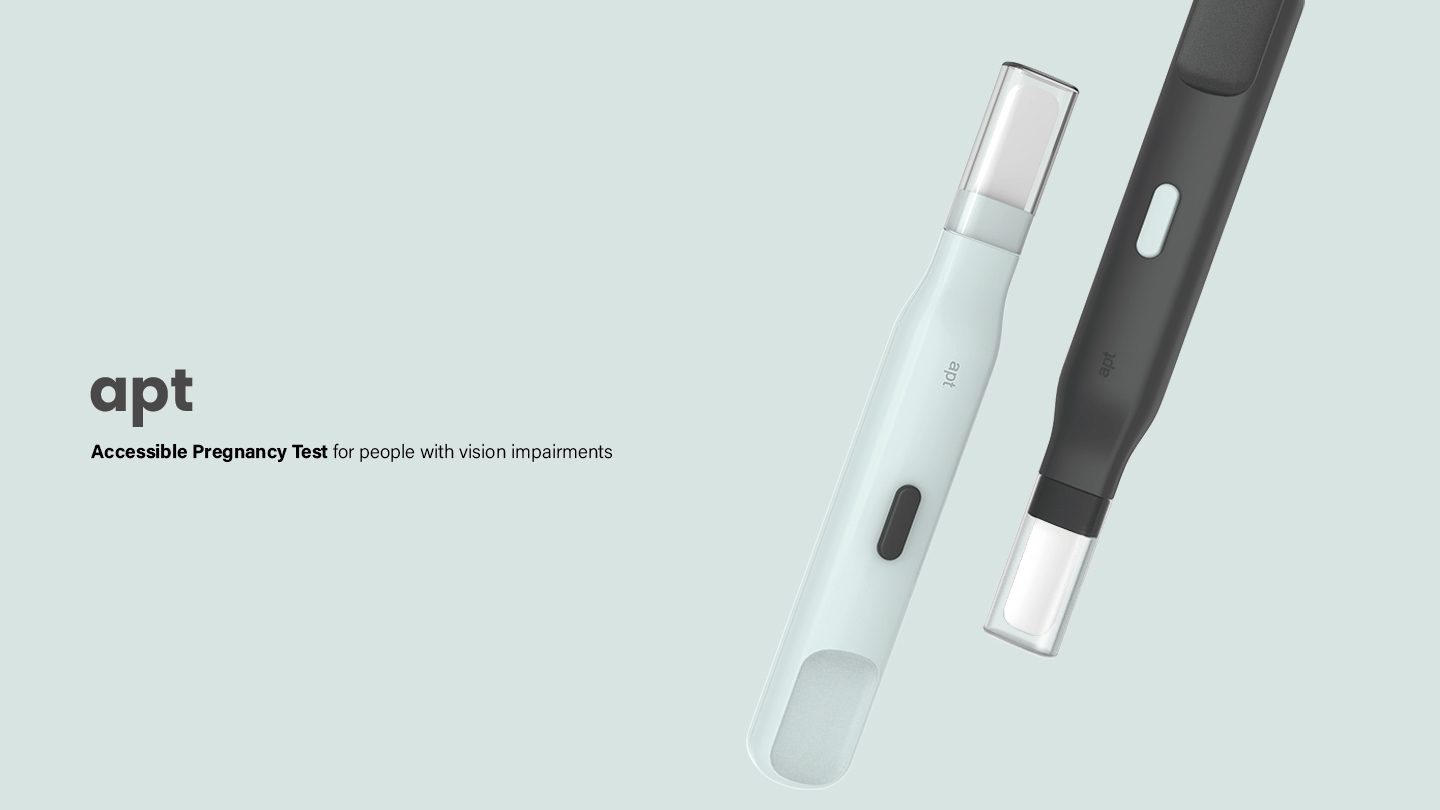
The Accessible Pregnancy Test (APT), led by Loft Senior Industrial Designer Saloni Bedi, demonstrates how equity-centered and intersectional design principles can transform a deeply personal experience. For decades, blind and visually impaired women could not independently know the results of a pregnancy test, often forced to share one of life’s most private moments with another person. APT changed that experience by becoming the first pregnancy test designed to be used without sighted assistance, translating results into tactile vibrations that can be replayed with the press of a button—restoring privacy, independence, and dignity.
The development process reflected the principles at the heart of the framework: direct engagement with the visually impaired community, extensive user research, hundreds of concepts evaluated against accessibility and usability criteria, and continuous feedback that guided the team toward a tactile communication system that addressed real needs rather than assumed ones.

Together, these four commitments form the fundation of a broader practice: human-centered design. Human-centered design provides the curiosity, empathy, and research discipline needed to understand real human experiences. Systems thinking reveals the broader landscape and identifies where meaningful intervention is possible. Strategic thinking aligns solutions with organizational capabilities and long-term sustainability. Equity ensures that the process remains accountable to the people it is intended to serve.
Lasting impact does not arise by accident, but instead emerges when design combines empathy with rigor, creativity with accountability, and purpose with the systems required to make change endure onwards.
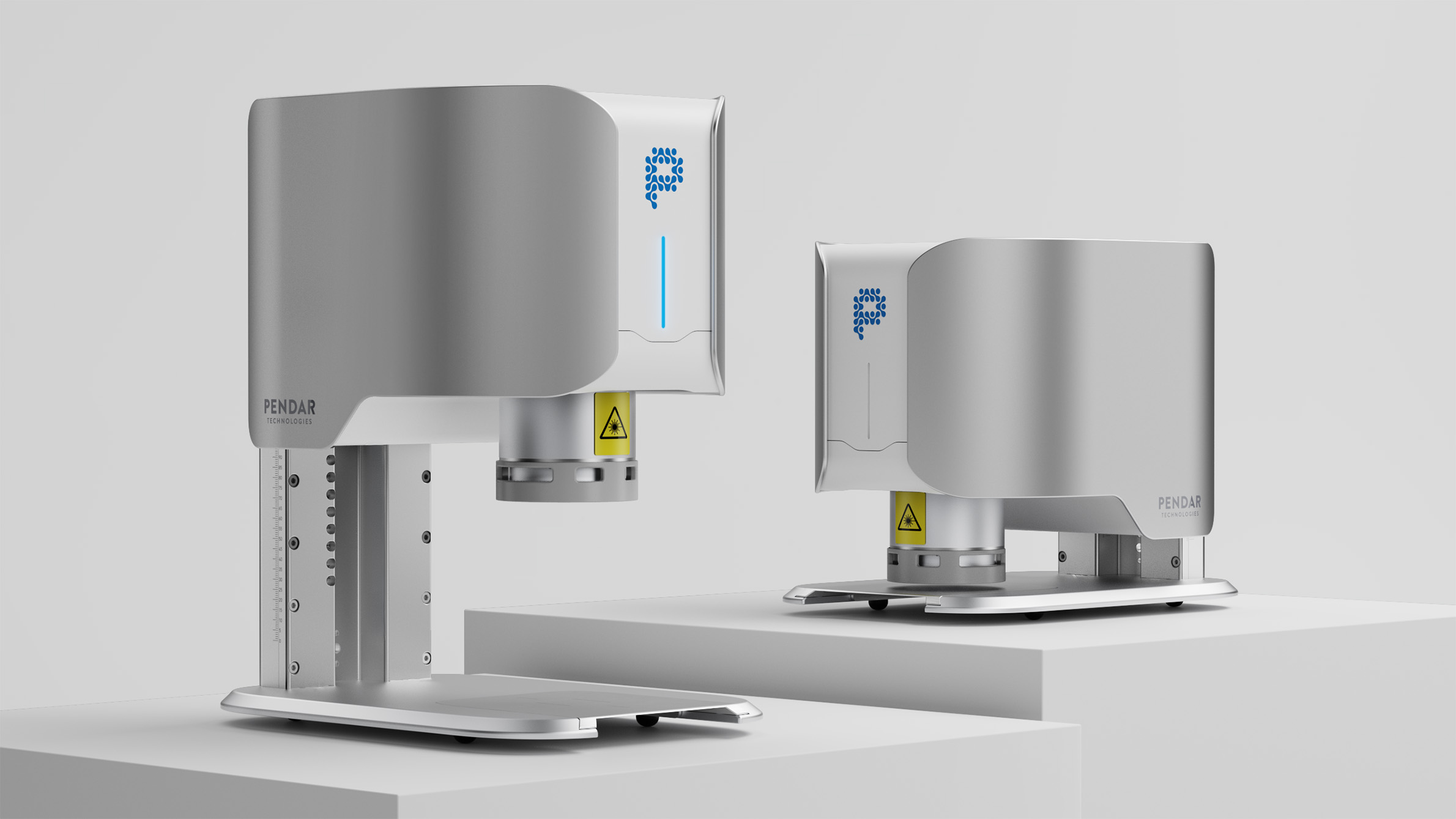
Design is everywhere, and increasingly, so is social impact. Consider Pendar’s M1, an automated portable Raman microscope developed with Loft is a rugged, sub-five-pound instrument capable of identifying narcotics, explosives, and hazardous chemicals in seconds, without sample preparation, and designed for use by personnel in the field with minimal training. At first glance, nothing about its market positioning suggests social impact in the traditional sense. It is positioned within the assertive language of security, forensics, and defense, with an emphasis on technical performance, detection capabilities, and operations. Yet its impact is unmistakable: preventing harm, protecting lives, and preserving the safety and dignity of the people who perform dangerous work on behalf of others. This example highlights an important shift in how we define impact.
Social impact is not a category of project; it is a dimension of design itself. It exists wherever design influences human safety, access, health, equity, or dignity, which is to say, nearly everywhere.
For many years, social impact was treated as a designation reserved for certain projects, organizations, or causes. But the principles that guide meaningful social impact – co-designing with communities, thinking systemically, centering equity, and recognizing diverse human experiences – should not disappear when the client is a security company, a healthcare organization, or a consumer brand.
This is the shift in perspective we advocate for at Loft. It moves the conversation away from labels that attempt to define whether a project is inherently “good” and toward the standards that determine whether it is effective, responsible, and meaningful. The central questions remain consistent across industries and applications: Does what we design improve the world in a meaningful way? Are we applying ethical practices throughout the process? Are we engaging the people affected by our decisions with respect, empathy, and genuine collaboration?
Design has always been rooted in a fundamental belief that human creativity, when guided by research, discipline, and responsibility, has the power to reshape the world around us, and be a force for social good. Every product, service, and system we create influences how people work, communicate, heal, learn, move, and experience everyday life. No decision in design is ever neutral. Embedded within them are priorities, assumptions, and values that follow into the world.
The question is not whether design has an impact, but whether that impact is intentional, thoughtful, and aligned with the needs of the people it serves.
Social impact design represents a higher standard for all design practice, and challenges designers to look beyond the immediate requirements of a brief and consider the broader consequences and implications of their decisions. Who benefits? Who may be excluded? What systems are being reinforced or transformed? What happens after the product launches and the spotlight moves elsewhere?
This perspective expands the role of the designer, empowering designers to see ourselves as participants in shaping the systems that define human lives. Whether designing a medical device, a public safety tool, a consumer product, or a professional technology platform, the same principles apply: understand people, recognize nuance and complexity, anticipate unintended consequences, and create solutions that can thrive.
Ultimately, social impact design raises the stakes of every design decision because it recognizes that innovation carries responsibility. The people affected by our work are not just end users, market segments, or data points, but are partners in the process and experts in their own experiences. They deserve more than consideration after the fact: they deserve a meaningful voice in defining the challenges, shaping the solutions, and determining the measures of success.
The future of design belongs not only to those who create but also to those who create in partnership with the people and communities they seek to serve.
Loft Design hosted this panel discussion with the team behind Sora on July 22nd to discuss the realities of impactful product development. Drawing from extensive experience in the healthcare space, we covered practical practical insights into how thoughtfully empathetic design can help build useful and meaningful interventions to enrich communities and empower lives. Watch below to hear about design in social impact, in application:
Emily believes in the power of using data and research as both qualitative and quantitative tools to drive positive impact. She's curious about how platforms and brands use insights to build personalized, human-centered experiences, and always contemplating the ways physical and digital systems are informing our daily lives and reweaving the fabric of a changing society.
Emily is studying Cognitive Science and Economics at Brown University, and is Loft’s Researcher for the Summer of 2026.

Previous
Next

Leadership
Innovation
Culture
Ecosystem Design
Strategy



.png)


